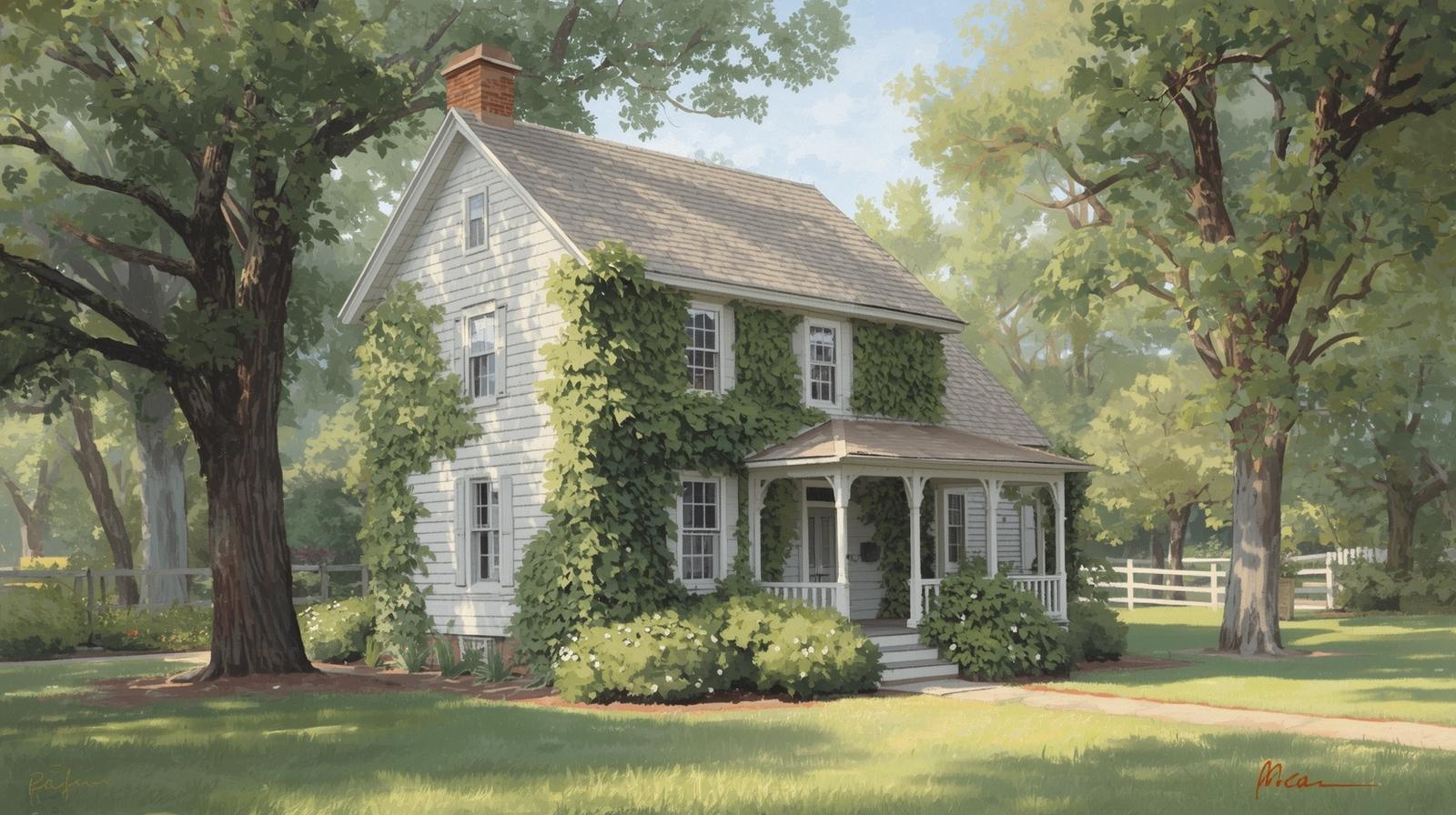
Today, I replayed the song that Miranda Lambert recorded called “The House That Built Me.” Do you remember that one? It’s such a tender idea — a young woman returning to the place where life began, walking through the memories that shaped who she became. But as I listened, I remembered what that meant for me the first time I heard it, and that it was hard to listen to for years. Visiting that house did not bring sweet nostalgia. It meant revisiting the house that broke me.
I had to leave that house to heal. I needed to rebuild the parts of me that were splintered by a family that should have protected and nurtured me. Each faltering step away from that past, every act of forgiveness I could muster, became part of my healing, eventually.
Over time, I came to understand that I was never truly a victim. I was kept — protected by a grace greater than my pain and brokenness. The breaking did not define me; the surviving did.
That doesn’t erase what happened. Those who were meant to guide and protect me failed in devastating ways. Once I left, I went on to make my own tragic decisions that wreaked devastation in my life and the lives of others that I loved.
Finally, I began to dig my way out of my dark, overwhelming emotional pit and build a life grounded in kindness, integrity, and care.
Out of those ashes, I’ve been able to recognize the same pain and confusion in others, and sometimes, offer them a glimmer of hope in their own healing. I find redemption in helping others when they seek guidance on their journey.
Lest anyone misunderstand, my mother was not part of that pain. I was taken from her when I was four — spirited 2,000 miles away under the guise of a “visit” with my father’s parents — and never returned.
My mother did try; this is not a story where she abandoned me. When my mother traveled by bus and tried to bring me home, she was physically stopped at the bus terminal by my father as we were trying to board. I was sixteen before I heard her voice and got to hug her again. In that moment, being ripped from her arms faded into being held tightly in her arms.
Sixteen is still young, but by then, the damage had run deep for both of us, scars growing over memories of things that couldn’t be changed. Though we weren’t able to reclaim those lost years, we built a relationship full of love and mutual respect, using our pain as our bond. Through her perseverance and unyielding love, I learned how to live in the present — how to accept what is with gratitude.
For years, I felt more like the girl in another song — the one who burns down the house of her pain in “Independence Day.” In my private daydream, the house was always empty. The flames consumed the sorrow, not the people, and scorched the ground. I resonated with the exhilaration of a revenge born of deep pain and anger.
The home of my childhood now belongs to someone else, and I wish them peace and joy. When I take a drive through my hometown to reminisce, I sometimes pause a few houses down, remembering what once was. It’s now a mixture of the good and the bad, with more memories of good. Then I drive on, thankful that it no longer holds a piece of me.
Were there good moments? Yes — laughter, warmth, small joys, holidays. But they were overshadowed for too long by fear, heartbreak, and dark secrets. What remains now is a quiet sadness for what could have been. Forgiveness heals; time alone does not.
Forgetting may never come completely, but the shame and gut-wrenching pain no longer follow me. For that, I am deeply grateful. These days, I live differently. I choose my words with care, knowing the power they hold. I make amends more quickly for words that do escape my lips. I have never and will never tell someone they have “bad blood” or “will never amount to anything.” I know the weight such words carry and how long it takes to climb out from under them.
I am grateful for the people who helped me along the way — the angels, seen and unseen, who believed in me when I couldn’t.
I am grateful, too, for those who cross my path who have never known such pain; their lives remind me that goodness exists in this world, that children are nurtured with care to grow into good, loving individuals.
And through it all, I am grateful for a God who never stopped knocking at my heart’s door. I am content now — not because life was easy, but because healing has been possible and perseverance has been worth it. Because through forgiving each of them, I am free. I told my daughter a few years back that I am actually grateful for every pain and abuse that I have experienced in my life because of what recovering from them has taught me, and how I have learned to serve others. The house that once broke me no longer defines me. The home I’ve built since is full of light, love, honesty, and grace. And that, to me, is redemption.
The House That Taught Me to Heal
Years later, I can see it clearly. That old house gave me something it never meant to — the grit to rise, the tenderness to forgive, and the faith to believe that love, real love, can start again in new places.
It took years to understand that healing doesn’t erase the past; it transforms it. The cracks remain, but light finds its way through them. Now, when I think of that house, I no longer feel the pain. I know in my soul who the girl is that learned to pray there, who learned to get back up, who learned to face her worst fears, who discovered that grace can bloom even in hard ground.
We all carry houses within us — some that built us, some that broke us, and some we’re still rebuilding with love and grace. Each one leaves its mark, shaping who we are and how we walk through the world. If you’ve ever stood before your own “house that built you,” whether in gratitude or grief, I’d love to hear your story. What did it teach you about strength, forgiveness, or finding peace?
Pull up a chair and share your thoughts in the comments below. Your story may be the light someone else needs to find their way home.
— Gritty Granny Living in the Here and Now
Leave a Reply